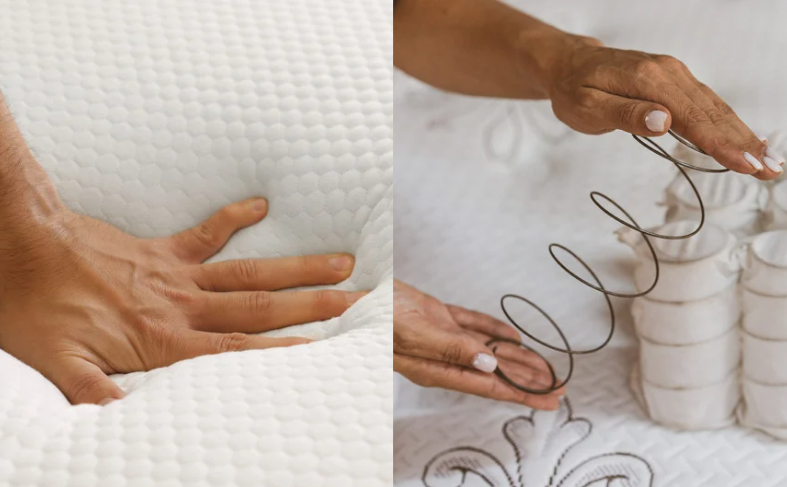
The debate over which is better, a foam or spring mattress, has been in existence for years and is likely to continue. However, when you have only used a foam mattress, you may not know what to expect from a spring kids mattress. Likewise, if you have only been buying spring mattresses, it is difficult to tell if a foam mattress is the right fit for your child.
Feature Comparison Between a Foam & Spring Mattress
The best mattress for kids should have specific age-appropriate features. When looking at both foam and spring kids mattress, you should consider the features to determine which one suits you best.
Support:
Spring mattresses tend to be a little bouncy, even when they are firm. The firmness tends to be concentrated at the top, partly because of the spring coils. Foam mattresses also tend to be firm, but it mostly depends on the density. If you want a softer mattress, a foam mattress with medium density is preferable since it contours and leaves a sinking feeling when one sleeps.
Spinal Alignment:
Spring mattresses tend to be firm and provide good support for spinal alignment. It is therefore not surprising to find a baby mattress made from pocket springs. Foam mattresses also offer different levels of firmness, especially in the kids’ mattresses. Some are of medium density, while others are high density. You should be more specific about how firm you want it, especially when seeking for the best mattress for kids.
Breathability:
Spring mattresses tend to be more breathable than foam mattresses because of the air pockets within the spring coils. It is the ideal choice for hot sleepers. However, foam mattresses made from latex tend to have a similar cooling effect as a spring kids mattress.
Motion Isolation:
If your child is a restless sleeper, you need to be more careful when choosing a baby mattress. For example, a mattress with inner springs tends to offer poor motion insulation, while pocketed springs are excellent for restless kids. On the other hand, the foam mattress handles movement really well, making it the best mattress for kids with bunk beds.
Durability:
Both foam and spring mattresses are durable, depending on the quality. For example, if you are interested in a kids mattress for longevity, you should opt for a high-density foam mattress. Low-density mattresses tend to sag over time. Spring mattresses also tend to be durable, but you should first confirm the quality of the springs.
Hypoallergenic:
Latex foam mattresses tend to be naturally safe, so you don’t need a mattress protector. Spring mattresses tend to have spots that harbor dust mites. It is best to have a seamless mattress protector for a spring baby mattress to protect your child from allergens that cause respiratory issues.
Noise:
After extended use, spring mattresses tend to squeak when the support wears out or if the coils have large pockets. Foam mattresses tend to be silent even after long-term use.
Price:
Both spring and foam mattresses are available in a wide price range, depending on the quality. You will pay more for a foam kids mattress with a high density, or spend less for a lower density baby mattress. A higher-quality spring mattress will also attract a higher price. Additionally, size also matters when it comes to price.
The decision on whether to buy a foam or spring mattress will depend on your budget, preference, and expectations. When you know what to expect from either mattress variety, you will make the right choice for the best mattress for kids.